



FROM FARM TO GLASS
Authentic matcha, directly from the plantation.

First harvest
First harvest of the year (first harvest), in April–May. The youngest leaves, with the highest concentration of L-theanine and antioxidants. The only standard for ceremonial-grade matcha.

Umbrirea frunzelor
Shade Grown – The plants are shaded before harvest to block sunlight. This increases chlorophyll and L-theanine, resulting in a vibrant green color and a naturally sweet taste without bitterness.

Stonde milled
The leaves are slowly ground using granite mills at low speeds, preserving their nutrients and aroma. The ultra-fine texture of ceremonial-grade matcha can only be achieved through this traditional method.

Discover Matcha
Matcha Greenglass comes from Uji, Kyoto, and is produced by a family with four generations of experience in cultivating and processing tea leaves and ceremonial-grade matcha.
How to choose high-quality matcha?
Color
High-quality matcha has a vibrant, almost emerald-green color. A yellowish or brownish color indicates oxidation or lower-quality raw material.
Origin
Japanese matcha from renowned regions such as Uji, Kyoto, is superior to alternatives. Avoid products that do not clearly specify their origin.
Texture
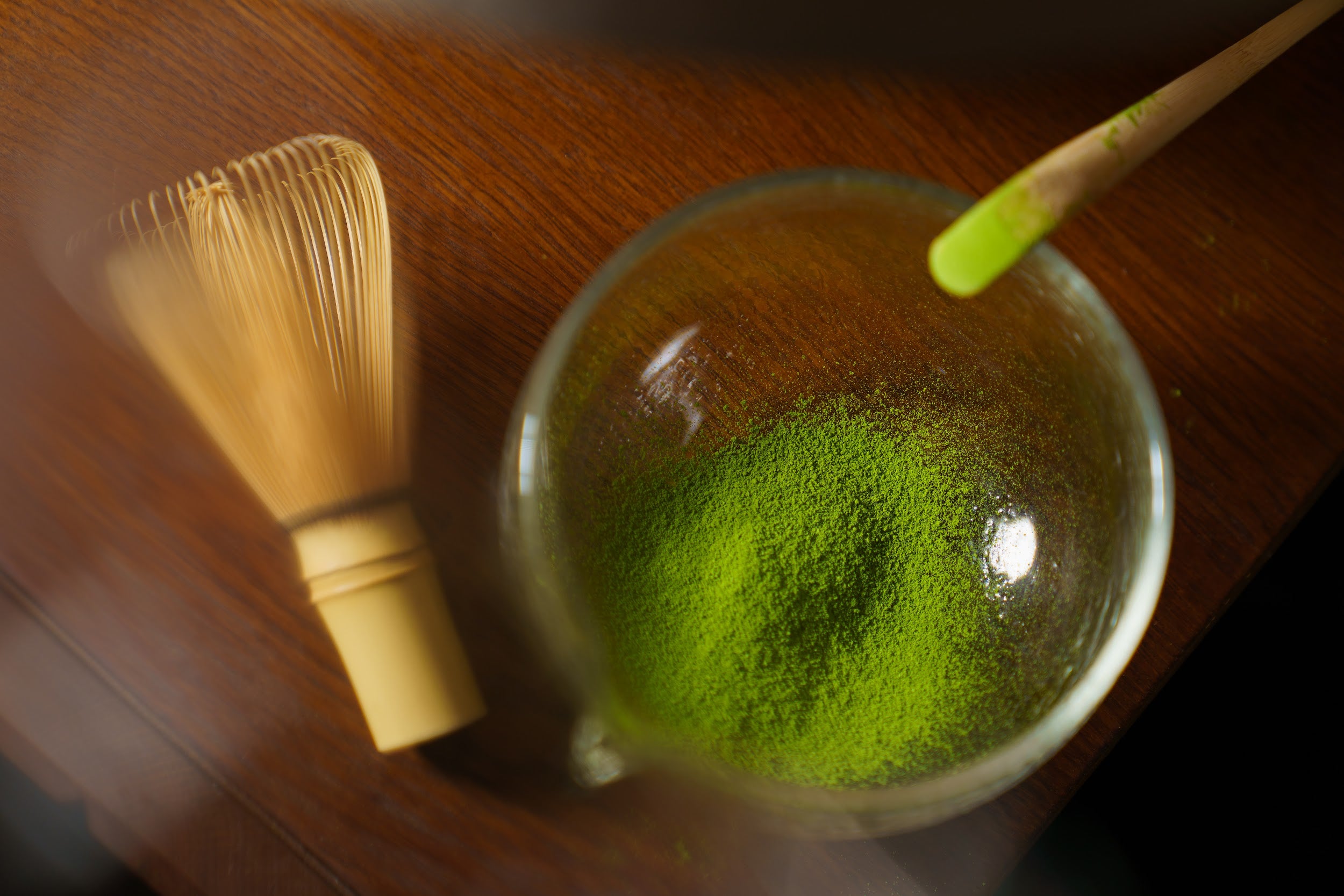
The powder should be extremely fine, with no visible granules. A grainy texture can indicate industrial milling rather than traditional stone grinding.
Shelf Life
Genuine high-quality matcha should not have an excessively long shelf life. The longer the shelf life, the more likely it is to indicate lower quality or the use of additives. Matcha Greenglass has a shelf life of 8 months, reflecting its freshness and the absence of additives.
What are the benefits?
Concentrated Antioxidants
With matcha, you consume the entire tea leaf, not just the infusion. This means up to 10 times more antioxidants than traditional green tea, including EGCG, the most studied polyphenol in the catechin family.
Calm Energy, Without the Crash
The caffeine in matcha works differently from coffee. L-theanine helps promote a slower, more sustained release of caffeine and may reduce the jitteriness associated with stimulants. The result: focus and mental alertness for 4–6 hours, without the nervousness or post-caffeine crash.
Natural Detox Support
Shade growing increases chlorophyll levels compared to conventional green tea. Chlorophyll contributes to the plant's natural antioxidant properties and is often associated with supporting the body's natural detoxification processes.
Origin
Uji, a district south of Kyoto, is where matcha culture took root over 800 years ago. The mild climate, morning mist rising from the Uji River, and rich soil create conditions that other regions cannot replicate. Here, shading is not a marketing trick, but a tradition passed down from generation to generation.
Matcha Greenglass comes exclusively from Uji, from the same family of producers now in its fourth generation. No intermediaries, no blends from other regions.
How is it produced?
Shading
3–4 weeks before harvest, the tea plants are covered. Without direct sunlight, the leaves produce more chlorophyll and L-theanine. This is what gives matcha its vibrant green color and sweet, umami-rich taste.
Harvest
Only the young spring leaves are harvested, either by hand or with careful selective machinery. The first harvest (ichibancha) produces the finest ceremonial-grade matcha.
Steaming & Drying
The leaves are steamed immediately after harvesting to stop oxidation, then dried. The result is called tencha.
Stem & Vein Removal
The stems and central veins are removed from the tencha, leaving only the clean leaf material.
Stone Grinding
The tencha is slowly ground on granite mills at a low temperature. A single mill produces approximately 30–40 g of matcha per hour. The slow grinding process helps preserve the aroma and vibrant color.
Matcha Greenglass goes through all these steps at the family farm in Uji, generation after generation. No shortcuts.
HOME MATCHA
Make a delicious matcha latte at home.
Add matcha
Add 2 grams of matcha tea to a small amount of water (50 ml / ~75°C) in a bowl. Sift the matcha beforehand for a finer, smoother, and more homogeneous texture.
Whisk well
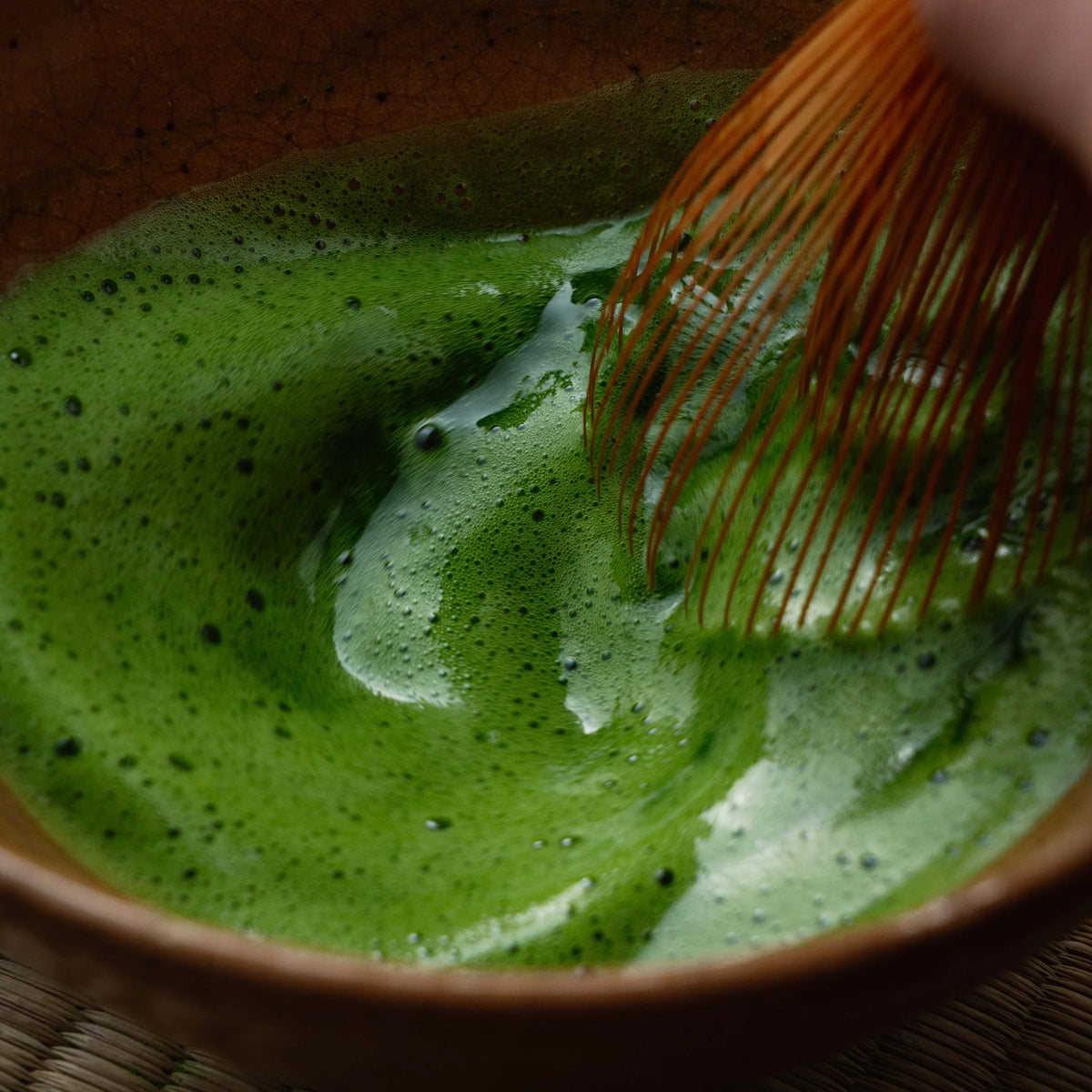
Whisk briskly using an electric whisk or a bamboo whisk (chasen), using a quick back-and-forth motion until a fine, even layer of foam forms on the surface.
Mix
Add 180–250 ml of hot milk. You can also add a sweetener or syrup, or ice for an Iced Matcha Latte.


-10% DISCOUNT SET
Matcha Greenglass 3-Variety Bundle

-10% DISCOUNT SET
Matcha Greenglass 3-Variety Bundle

Cred că e unul dintre cele mai autentice și calitative branduri de matcha pe care le-am încercat. Gustul este fin, echilibrat, exact cum trebuie să fie un matcha premium. Am făcut un blind buy, dar a meritat.

Această matcha, spre deseobire de no-tsuki, este mai dulce și mai gingașă. Este pentru prima dată când dau de o astfel de aromă moale la matcha. Mi-a plăcut foarte mult!

Vreau sa va zic ca ieri am primit comanda de matcha, si abia asteptam sa se faca dimineata sa o incerc…fara cuvinte, cea mai buna de pana acum, din ce am mai testat. Cremoasa, fina, parfumata..superba!

Foarte gustoasa acest tip de matcha, super cremos si umami, e printre preferatele mele

Foarte bun. Fin, cu un miros placut si un gust desăvârșit. De cand l-am cumparat, este un ritual zilnic. Imi place mult si il recomand cu drag.

Foarte bun. Fin, cu un miros placut si un gust desăvârșit. De cand l-am cumparat, este un ritual zilnic. Imi place mult si il recomand cu drag.

Culoarea și gustul sunt perfecte!!


